Foley is the art of making sound effects by performing them. An artist watches the footage and creates footsteps, cloth movement, and prop sounds live, in sync with the picture, using whatever object happens to make the right noise. The craft is named after Jack Donovan Foley, who performed live effects at Universal Pictures when movies first got sound, and it still supplies most of the everyday sounds you hear in a finished film.
Here's the thing about production audio: the microphones on set are there for dialogue. They're not positioned to catch a jacket sliding off a chair or boots on gravel, and even when they do, props built for the camera rarely sound like the real thing. So nearly everything else gets added after the shoot, one performed sound at a time.
This guide covers what foley is and where the name comes from, the three types of foley sound, famous movie sounds and the odd objects behind them, how to record your own foley at home, how sound effects get made beyond the foley stage, and when pulling from a library beats performing it yourself.
Record what matters. License the rest.
About 100,000 royalty free sound effects, searchable by what the scene needs and covered under one Soundstripe license.
What Is Foley? The Art Behind Movie Sound Effects
Foley is a performance discipline. Instead of cutting pre-recorded sounds to picture, a foley artist recreates them in real time on a specialized stage, matching every step and rustle to the action on screen. The goal is for you to never notice. When it works, your brain accepts that what you're hearing is what you're seeing, even though the snow was cornstarch and the horse was two coconut halves.
Why It's Called Foley
The name comes from Jack Donovan Foley. When The Jazz Singer hit theaters in 1927 and pushed the whole industry toward sound, Foley was working at Universal, and his crew performed live effects (clapping, laughter, crowd sound) straight to picture for the studio's musical Show Boat. You can read more about Jack Foley's early sound work at Universal. Nearly a century later, the technique he worked out is structurally the same one used on films today. For the modern version of the job, here's what a foley artist does day to day.
The Three Types of Foley Sounds
Foley work sorts into three categories: footsteps, movement, and props. Between them they cover nearly every human-scale sound in a scene, which is why foley effects on a film typically number in the thousands.
Footsteps
Every step a character takes gets performed. Foley stages have pits built into the floor and filled with different surfaces (gravel, concrete, wood, sand) so an artist can walk a character from a driveway into a kitchen without leaving the room. The hard part isn't the walking. It's matching the character's weight, pace, and mood, in the right shoes, take after take.
Movement
Movement covers clothing: the low rustle you hear when someone crosses their legs, reaches across a table, or pulls on a coat. It's the least noticeable layer and the one a scene feels strangely empty without. Artists keep racks of fabric on hand because denim, leather, and silk each read differently on a microphone.
Props
Props are everything characters touch: coffee cups, door latches, keys, a sword leaving its sheath. Some prop sounds are recorded with the actual object. Plenty aren't, because the real object sounds wrong on mic. That's where the craft gets inventive.
Famous Sound Effects and How They Were Made
Some of the most recognizable sounds in film history came from things you have in your kitchen. A film school that trains foley artists keeps a running list of examples in its guide to the art of recording custom sound effects to match a film's visuals. A few favorites:
- E.T. (1982): the alien's squishy movement came from Jell-O and a damp T-shirt.
- Titanic (1997): Rose's frozen hair crackling off the wood was frozen lettuce being peeled apart.
- Fight Club (1999): the fight impacts mixed chicken carcasses, cracked walnuts, and heavy bags hitting the floor.
- The Exorcist: the head-turning sound was an old leather wallet, credit cards still inside, twisted next to the microphone.
Working artists still solve scenes the same way. National Geographic has photographed the props Skywalker Sound artists use: crampons dragged across concrete for an ice-skating scene, a soaked chamois cloth wrung out for anything gory. One rule holds across all of it. The right object is the one that sounds right, not the one that looks right.
How to Record Your Own Foley Sound Effects at Home
You don't need a foley stage. A quiet room, a decent microphone, and a box of household junk will get you surprisingly far, and for a short film, a podcast, or a YouTube video, homemade foley can beat a generic library hit precisely because it's synced to your footage. Fair warning: it eats time. Budget more takes than you think you need.
How to Record Your Own Foley Sound Effects at Home
- List the sounds your scene needs
Watch your footage with the sound off and write down every sound the scene implies. Note the surface under every footstep and every object a character touches. This list becomes your session plan, and it will run longer than you expect.
- Gather everyday props
Match each sound on your list to an object you can control, and test candidates by ear before you hit record. The object that looks like the source almost never sounds like it, so audition a few options for every sound.
- Set up a quiet recording space
Pick the deadest room you have, hang blankets to cut reflections, and record a full minute of silence before anything else so you know your noise floor. That silent capture doubles as room tone and ambient noise you can use to smooth your edits later.
- Perform the sound in sync with your footage
Play the scene on a screen you can see from the mic and perform each sound while watching, the way a foley artist does. Performing to picture bakes natural timing into the take, which beats nudging clips around a timeline afterward.
- Layer and edit your takes
Stack your best takes in your editor, trim them to picture, and balance them against dialogue and music. If the line between those two jobs is fuzzy, here's the breakdown of sound editing vs sound mixing.
Everyday Props That Make Professional Sounds
Classic pairings that have worked for close to a century:
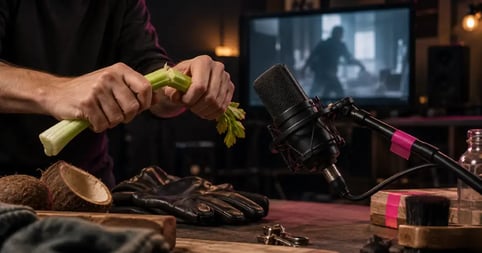
- Breaking bones: snap a stalk of celery.
- Footsteps in snow: squeeze a pouch filled with cornstarch.
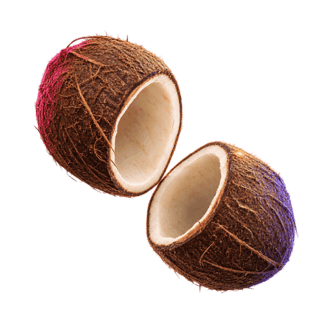
- Horse hooves: clap two coconut halves together.
- Flapping wings: flick a pair of leather gloves.
- Body punches: thump a phone book, or a thick paperback if you can't find one anymore.
Beyond Foley: How Sound Effects Are Made Today
Foley covers the human-scale layer. The rest of a soundtrack gets built other ways, and most projects use all of them at once.
Libraries. Pre-recorded effects you drop into your timeline: explosions, ambiences, whooshes, and anything too big or too dangerous to perform. If you're new to the category, start with what SFX are and why they matter.
Field recording. Taking a recorder out into the world to capture real environments and one-off sounds. It's where most library content comes from, and it's a skill worth having yourself. Here's a primer on field recording.
Synthesis and processing. Sounds built or reshaped inside a digital audio workstation. Pitch a recording down an octave and it becomes a monster; layer it under a real animal and it becomes a believable one. This is the territory of using sound design to add depth to your film.
None of this replaced the foley stage. In an interview with Skywalker Sound foley artist Shelley Roden published in 2026, her recent credits include Jurassic World: Rebirth, F1: The Movie, and Andor. Studios keep paying people to perform sounds because sync and nuance are still easier to perform than to fake.
Perform It or Pull It From a Library?
Honest answer: do both. Perform the sounds that have to marry your footage, meaning footsteps, handled props, and anything the camera lingers on, and pull the rest. No home celery snap will beat a well-recorded explosion, and no library hit will sync to your actor's walk like a performed take.
| The situation | The better call |
|---|---|
| Footsteps and handled props, on camera | Perform it |
| Explosions, vehicles, weather, crowds | Pull it from a library |
| Tight deadline, lots of scenes to cover | Pull it from a library |
| A signature sound your project will be known for | Perform it, then process it |
When it's library time, ours holds about 100,000 sound effects you can search by what the scene needs and drop straight into your edit. Browse the royalty free sound effects library and see what's already waiting for your timeline.
One account, every sound your timeline is missing.
One subscription covers unlimited downloads of royalty free sound effects and music for your projects.
Frequently asked questions
Foley is the craft of performing everyday sound effects live and in sync with picture, using props to recreate footsteps, cloth movement, and object sounds. It takes its name from Jack Donovan Foley, who performed live sound effects at Universal Pictures when the film industry moved to sound in the late 1920s.
Sound effects (SFX) is the umbrella term for every non-dialogue, non-music sound in a project, whether performed, pulled from a library, or built in software. Foley is one way of making them: performed live by an artist in sync with the footage. All foley is SFX, but most SFX in a modern project never touch a foley stage.
The three types of foley are footsteps, movement, and props. Footsteps cover every surface a character walks on, movement covers the rustle of clothing, and props cover the objects characters handle, from coffee cups to swords.
Record in the quietest room you have, use household objects as props, and perform each sound while watching your footage so the timing syncs naturally. Classic starters: snap celery for breaking bones, squeeze a cornstarch pouch for footsteps in snow, and clap coconut halves together for horse hooves.
Yes. Foley remains a standard step in film and television post-production, and working artists hold credits on current major releases. Most productions now combine performed foley with library and synthesized effects rather than choosing one over the other.