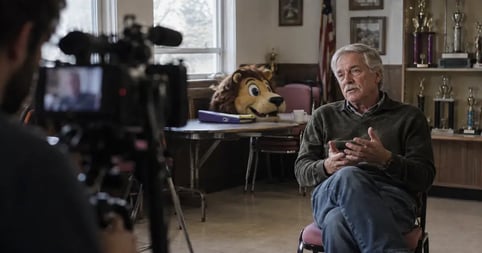
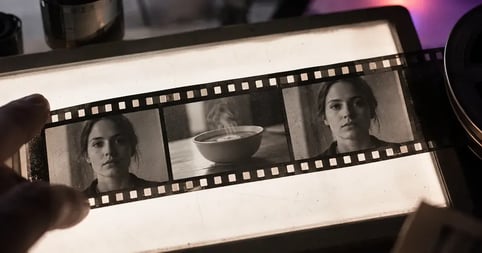
Making a mockumentary comes down to four things: a subject absurd enough to be funny but plausible enough to film straight, a loose script that leaves room to improvise, camera work disciplined enough to pass as real documentary footage, and music and releases cleared before you publish. The fiction is the easy part. The documentary rules are what sell it.
Most advice on the genre stops at the joke. Find something weird, shake the camera, done. That gets you a sketch. What holds up is a film where every documentary convention stays intact even though nothing being documented is real. This guide covers the subject, the script, the shooting rules, the music problem nobody explains, and the paperwork you cannot skip.
Your cut is done. The score is not.
Search 116,000 tracks by mood and find the earnest cue a real documentary crew would use.
What makes a mockumentary work
A mockumentary is a fictional story told with the technique of a documentary. Interviews, observational footage, narration, and archive-style inserts behave exactly as they would in a real film. The comedy comes from the gap between how a character sees themselves and what the camera shows, and the audience closes that gap without help.
You are borrowing a visual grammar, not inventing one. Talking heads shot slightly off-centre. Handheld coverage that reacts a beat late. Documentary lower thirds that look like a post team built them on a deadline. The moment one looks staged, the premise reads as a joke about documentaries instead of a documentary about something absurd.
How to make a mockumentary, step by step
It runs in the same order as any small documentary, with one addition: you are writing the thing you are pretending to discover. Keep the shooting script loose, and know that a phone is enough. These iPhone filmmaking tips beat a rental invoice.
How to make a mockumentary in seven steps
- Find an absurd but plausible subject
Pick a world a real crew could credibly have been given access to: a competitive hot sauce club, a failing regional mascot agency. If it feels too far, it probably is not far enough.
- Build characters who do not know they are funny
Every character needs a sincere want and a blind spot. They should believe the film will make them look good. Nobody is in on the joke.
- Write a loose script, not a locked one
Write the structure, the beats, and the interview questions. Leave the dialogue open. Scripted mockumentary dialogue sounds written, which is the one thing it cannot sound.
- Cast performers who can improvise straight
You need actors who can be funny without playing funny. Rehearse in character, in the interview chair, before you shoot.
- Shoot within the camera-plausibility rule
One camera, handheld, natural light. Put it only where a documentary crew could have stood, and let it miss what a real operator would miss.
- Score it like a real documentary
Choose music that takes the subject as seriously as the subject takes themselves. Cut it in restrained and let the picture carry the comedy.
- Clear the releases before you publish
Signed releases from everyone recognizable, permission or a permit for locations, licensed music. Do it before the edit, not after a flag.
Shoot it like a real crew was there
The rule that separates believable from amateur is camera plausibility. The camera can only be where a documentary crew could physically have been, holding the gear that crew would have been holding. Break it and the audience stops believing the frame, even if they never work out why.
In practice: one camera, two at most, handheld and over the shoulder, natural or on-camera light rather than a built setup. A different discipline from how to film cinematic interviews for a client. No dolly moves, no camera waiting inside a room nobody has entered yet. Cover the gaps with b-roll footage and use talking heads sparingly. Leaning on the interview chair is the most common way these films go flat, because a character explaining the joke is a character killing it.
Score it without breaking the joke
A mockumentary is scored like the documentary it pretends to be, not like a comedy. The music plays the subject's self-importance completely straight and the audience supplies the irony. Winking music does the joke for the viewer, the fastest way to make an absurd premise feel small.
Reach for the earnest stuff. Restrained piano, patient strings, the cue a real crew would put under a man describing his life's work. That is why royalty free music for documentaries beats royalty free music for comedy videos as a starting point. Keep score and diegetic sound separate in the mix, as with any sound design in film.
A recognizable commercial track breaks the illusion and the licence at once. Copyright protects music two ways, as the composition and as the recording, and a use touching both needs permission from the rightsholder of each work separately. Two negotiations before a frame is legal.
Clear the rights before you publish
A mockumentary invents its events but usually films real people in real places, and that is where the exposure sits. Not in the fiction. Get a signed release from everyone recognizable on camera, including anyone who wandered into a shot, and get it before you shoot.
Mocking a public figure and mocking a private individual are different risks. In Hustler Magazine v. Falwell (1988) the Supreme Court held that the First Amendment protects material clearly presented as parody of a public figure, where a jury had already found it could not reasonably be understood as describing actual facts. Private individuals get no equivalent treatment, and there is no federal right of publicity to work from: it is recognized state by state, and the boundaries vary widely. None of this is legal advice.
Locations are simpler than expected. New York City requires no permit for a hand-held camera or a camera on a tripod, provided you do not claim exclusive use of city property and have no prop weapons, prop vehicles, stunts, or actors in police uniform, per its film permit rules. Anything more counts as equipment. Other cities draw the line elsewhere.
If you are paying performers, check the tiers. The SAG-AFTRA Micro-Budget Project Agreement covers live-action projects budgeted at $20,000 or less, shot entirely in the United States, scripted or unscripted. It does not cover commercials or corporate videos, so a brand making a mockumentary-style marketing piece sits under a different contract than a creator making a festival short.
One last thing before you upload. A mockumentary shot with actors is not synthetic media, but altering real footage or generating a real person's voice triggers YouTube's disclosure requirement, which does not apply to clearly unrealistic content or special effects.
Music that plays the subject straight.
Search 116,000 tracks by mood and instrument, and find one that takes your subject seriously.
Frequently asked questions
A documentary records real people and events. A mockumentary uses identical technique to present fictional people and events as though they were real. The camera work, interviews, and structure are the same. Only the subject is invented.
Usually yes, with a signed release. Without one you risk claims over use of a person's likeness, and in the United States that right is recognized state by state rather than federally. Parody of a public figure carries strong protection. A private individual, much less.
You need a written structure, not written dialogue. Plan the beats, the character wants, and the interview questions, then let performers improvise the lines. Scripted dialogue sounds written, and that is the one thing a fake documentary cannot afford.
A phone is enough. The genre rewards handheld, natural light, and imperfect framing, so an expensive camera package works against the look you want. Spend the money on sound instead: bad audio reads as amateur faster than soft picture.