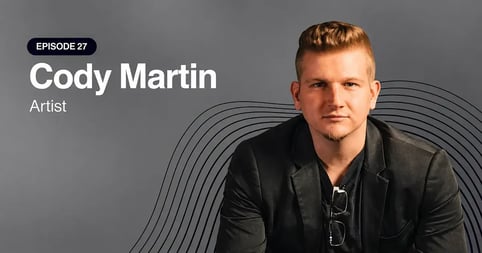
Jen Pyken has supervised music on more than a thousand episodes of television. She was nominated for a Primetime Emmy for This Is Us and won the Guild of Music Supervisors award for it, and her credits run from Happy Gilmore through Felicity, Alias, Lost, One Tree Hill and Workaholics to Hallmark's The Way Home, which she is on now. She also grew up in the San Fernando Valley making instruments with her dad and dancing around the living room, which turns out to be the more relevant qualification.
Jeff Perkins talks to Jen about the Walkman that taught her to soundtrack her own life, the mentor who took a 20-something assistant to every meeting on Reservoir Dogs and Pulp Fiction, the song she commissioned for The Way Home that has now lived across four seasons and several characters, and how a supervisor actually finds a song nobody has heard.
Key takeaways
- Music supervision is collaborative, not curatorial. People assume the supervisor picks every song. Sometimes she does. Often somebody else brings it in and her job is to make it work.
- On This Is Us, the rule was that songs would not play under scenes. Then the creator started running an unknown indie track across five scenes at a stretch, and the show became music-driven.
- She builds playlists of what she thinks the characters would be listening to, most of which never get used. They're for her, not the show.
- Budget is a creative constraint she's glad to have. Not being able to afford Springsteen is what gives an unsigned artist the placement.
- A brief only gets you so far. She often can't describe what she wants until she hears it.
- Her three C's of the job were creativity, collaboration and clearance. After this conversation she added a fourth: curiosity.
Listen to the episode
Conga drums in the living room
Jeff: Let's learn about your origin story. Tell us a little bit about where you grew up.
Jen: I grew up in the San Fernando Valley, which is a suburb outside of LA, actually in LA County. I grew up in a creative family. My mom always painted, and she was a teacher. There was no YouTube or TikTok or anything, so we had fun in our house. My dad would play the conga drums and play music, and we would all make instruments and just dance around the house and be present and laugh and have fun. So I was always surrounded by music. My dad loved Tito Puente and Latin jazz and soul music, so I was raised with that.
Jen: Then as I got older I started getting my own taste in music. I have an older brother and an older sister, so I was influenced by them, which is really interesting. My brother would quiz me in the car on the way to school, because he could drive, like Name That Tune. I don't know if anyone even knows that game show, but it was name that tune in three notes, and he would always make me name that tune on the radio. I was terrible at it, but it was fun.
Jen: They were going to concerts. Even though I was too young to go, I'd hear they were going to see Oingo Boingo or Devo, and I would go with them to the Santa Monica Civic to buy the tickets. I was always just around the music. And I went and saw bands at little small clubs with my family.
Jeff: What was your first concert?
Jen: I know it's not the coolest concert, and I wish it was, but the one I remember was in high school, the Go-Go's at the Greek Theatre. My friend took me for my birthday and she got me a t-shirt. It was very cool. At that time there weren't a lot of all-female driven bands, so it was very unusual.
Jeff: Was that your taste, the poppy hits at that time, or did you like everything?
Jen: That's why I think I love music supervision so much, because when I work on projects it's always different. I had friends who were into the Smiths and Echo and the Bunnymen, and I would go to those concerts. I actually went to the US Festival. I love the English Beat. I love the Police. I've always been sort of a sponge, and then trying to find stuff that now would be indie artists. So I became a big indie girl.
Jen: And then I worked for a music supervisor and DJ who ran all these clubs in LA, and I got really into the hip-hop world and helped him produce a hip-hop record for Warner Brothers. I'm actually on the record. It's called Funky Reggae, and we did hip-hop artists with Jamaican artists. KRS-One produced one of the tracks. So I started getting more into hip-hop before hip-hop was even really in the Grammys. I remember buying my De La Soul album. I wish I still had it. I'm just kind of a mishmash of everything, and I still am that way today. I think maybe it's because my family was very open-minded, so I was never told anything except be open to everything.
Music supervising her own life on a Walkman
Jen: When I went off to college it really helped me a lot, because I had a Walkman and I would walk around, and I was kind of music supervising my life. If I was having a bad day, music really changed who I was and changed how I felt. So it was really important to me, and I started making mixtapes. In college I became a DJ at the radio station, and then I interned at record labels.
Jeff: The Walkman is something a bunch of people have said in recent interviews. It seems to be a theme with people in your profession, that you started with the Walkman soundtracking your day, and then that translated into music supervision.
Jen: Because you could make a sound. You made a mixtape. Now you just go to Spotify, it's so different. And it's funny, because one of my favorite songs that I used to listen to over and over is "Running Up That Hill" by Kate Bush. So when it was used in Stranger Things, which I had nothing to do with, I'm like, oh my god, I've always wanted to use that song. How brilliant. I'm always in awe of songs I've always wanted to use and then someone else uses them.
Jeff: One of the great placements.
Jen: It's really hard sometimes to get people to agree, and I don't know how that happened. When you talk about music supervision, it's all about collaboration. People are like, don't you pick all the songs? And I say, sometimes I actually pick all of them. But a lot of times someone brings it in. It's a collaborative field and a collaborative job.
Jeff: The cool thing about "Running Up That Hill," and where great music supervision comes in, is that you took a song from the 80s and opened it up to a new generation. It becomes the number one hit. My 15-year-old daughter loves "Running Up That Hill."
Jen: And then she probably knows other Kate Bush songs. I mean, I used to listen to Aztec Camera. Do you remember that band?
Jeff: I don't.
Jen: Check them out.
The blazer her mom bought her
Jeff: At what point did you realize this is your career? Because if anyone ever told me there's a whole career path picking the right songs for shows and movies, who wouldn't want to do that? But nobody knows about music supervision until they get into it or meet a music supervisor.
Jen: That's a good question. I'm not one of those super ambitious people who says I'm going to do this career. Let's go back. My mom bought me a skirt and a blazer to get a job out of college. And I started going on these informational interviews and I'm like, oh wow, this is not me. I never felt comfortable. When I interned at a record label in college, I got to wear jeans and a t-shirt, and that's when I started liking it, that I could be who I was and not have to transform into somebody I wasn't.
Jen: I knew I didn't want to work in an office and I didn't want a nine to five, even though I ended up working at different record labels. You could always get in at 10am. So I think working for different people and learning from each of them, I just moved my way through it, not knowing exactly what I was going to do.
Jen: Then I worked for Island Records and they were doing soundtrack albums, so I got to learn how it works. They split my job between publishing and soundtracks. Chris Blackwell, who started Island Records, owned a publishing company and a record label, and they paid half my salary each. So I learned about music publishing.
Jen: I had some really amazing mentors. Karyn Rachtman was one of them. When she was starting out I was still in college, and she would recommend me for jobs. If nobody knows who Karyn Rachtman is, she was the music supervisor on Pulp Fiction and Reality Bites. I did this amazing hip-hop album called Judgment Night with her that was totally ahead of its time. And then I eventually found my way back into music supervision working with Karyn as her assistant. You've got to start somewhere. It was a great training opportunity for me, and she gave me my first music supervision gig.
Reservoir Dogs, and a mentor who took her to every meeting
Jen: I worked for Lawrence Bender delivering Reservoir Dogs. What a gift. I learned how to deliver a movie, actually deliver all the paperwork on a movie that was going to be one of the most iconic movies ever. And Karyn was music supervising that movie, and she got me in.
Jen: One of the things I've learned is that the people you meet are going to believe in you when you don't believe in yourself. I had all these people saying, oh, try this job. So I kept moving through different jobs, but they were all related to film and TV and music.
Jeff: What an experience to work on Reservoir Dogs, which had so many iconic songs in it.
Jen: I wasn't the music coordinator. I worked doing all the paperwork with the producer, Lawrence Bender. I worked out of his house. He used to make me lunch every day. I know these people from before they were, you know. I'm very lucky and grateful that I got to be around and work on such great projects and learn so much. And Karyn is still working. She just did I think the Minions movie. She lives in New Zealand now, partially here. I'm still friends with her. Building relationships all these years, and I end up working with them, and some people I worked for then work for me. It's been cool, looking out for people as they looked out for me.
Jeff: I was also the coordinator on Pulp Fiction. In those movies, how much is Tarantino putting his thumb on the scale for music selection, and how much is it collaborative?
Jen: I never worked directly with him. Karyn was very tight with him, and she was really creative. Part of my finding things outside the box comes from that. When you have coordinators, they have different taste in music and a different history. So what she brought to it was things that maybe Quentin didn't have. And at that time he was clearing songs and he put that whole not-having-score approach into making his movies. She was pretty hands-on, and she took me to every meeting.
Jen: All the meetings on Reality Bites, I went to. That's a really great mentor, because she didn't need to take me. So I met a lot of directors, I saw things on set, I was constantly curious and learning. But every project's different, so I can't say who picks what. Quentin's got amazing taste and he's an amazing filmmaker.
Where a This Is Us song starts
Jeff: Let's talk about the craft. This Is Us is a show you worked on for a long time. Where do you start with the song selection process?
Jen: I had worked with Dan Fogelman on his previous TV show, so I already knew him, which was a really great start. I worked on a show called The Neighbors for ABC, a really fun half hour comedy. So when This Is Us came around, the directors on it had a very clear view of what they wanted, and Dan, who created the show, hires people he believes in and lets you do your job. He'd have ideas. He'd say, I really want this song for this scene, and then I try to clear it. Sometimes people don't want their songs used, so clearance is a big part of it.
Jen: We had some meetings at the start, and Dan said, when we go into these flashbacks we're going to play songs from those time periods. But as we started editing the first few episodes, he had this thing, I don't even know if it was a rule, that we're not going to play the song under the scene. And then he started playing it. I'd find some indie song that was completely unheard of, and he'd play it through a scene in present day and then keep it going for three minutes through five scenes. And it worked.
Jen: So I started thinking, okay, now we have to find these cool indie songs. But then we'd also find George Harrison songs, and then put Mandy in the studio, and Chrissy was in the studio. It started becoming a more music-driven show over time.
Jen: On that show they kept things so close to the vest. I signed an NDA on everything I do, and they still didn't tell me things, and I'm part of the team. They were so concerned anything would get out. Now they laugh about it, but they didn't want anyone to know how the fire happened, all of that. So sometimes I was out of the loop.
Jen: I would get the cuts, watch the scenes, play stuff to picture, and maybe send a few choices to edit. But usually when I start a show and I've got the feel of it from the pilot, I'll start filling the edit bay up with music I think might be the sound of the show. Whether it works or not, it's just getting it set up.
Jen: And there's always budget, even when you have a big show like that. At that time we had a pretty good budget, and it's never enough. Sometimes we couldn't afford Bruce Springsteen or Billy Joel, so I'd have to be creative and balance budgets. That's another part of music supervision. I pride myself on not going over budget. That's why I get hired, because I'm going to present what we can have.
Jen: On that show, Siddhartha Khosla was the composer and I worked really closely with him. He happens to be Dan Fogelman's roommate from college, so they were like this. I'd get information from Sid sometimes. And Sid worked on The Neighbors, the first show Dan and I did together, so I already had that bond with him and built on it. We would talk about, well, what's she listening to now? The kids are growing up in the show, what would they be listening to? So I would make playlists for myself of what I thought the characters would be listening to. Sometimes they'd never get used. They were just for me to understand the character.
Jen: You could watch the scenes in This Is Us and I swear to God you would cry without the music. And then you had the music in and it really sometimes elevated it. It was a challenging show, because each episode was like working on a movie. We did 18 episodes. It was like 18 small one-hour movies.
Taking from real life
Jen: I remember on one episode of This Is Us, someone was dying. My dad was in the hospital at the time. He was a veteran and he was at the VA, out of surgery, and he was sharing a room with someone. I said to my brother, I think that guy's going to die. And he said, no, his son keeps visiting. And then the guy started singing. He was singing "Go Down Moses." Way down Egypt. And he was singing it as he was dying. And he did pass away.
Jen: We didn't end up using it in This Is Us, but I take from my real life to help me do scenes I wouldn't know what to do with. I'm like, we need a song in here. People go to their roots. What did that mean to him?
Jen: I think sometimes music supervision is bringing from my real life, and I think that makes me better at what I do. I love to travel, so when I travel I really listen. I was in China and all these local Peking duck restaurants are playing what sounded like Copacabana and female singers, when you'd think it would be traditional Chinese music. And I'm like, well, maybe if I ever have a scene. When I go to the dry cleaners I'm always listening. The ice cream truck, the cars next to me. Being aware of my surroundings. I think that's music supervision. I don't know what everyone else does. Everybody's so different.
A song that lives across four seasons
Jeff: You've probably placed thousands of songs at this point. Is there one you'd point to as the best placement you've ever done?
Jen: Workaholics has so many scenes I could go on and on about. But I think it's the show I'm working on now, The Way Home. I had a song written for the show. I started about two weeks before it started shooting and they said, we need a song written. And I went to Maria Taylor, who's in the band Azure Ray. I'd placed a lot of their songs in Felicity and I used to listen to her album all the time. I met her through some people, and she'd never written a song for a TV show or a movie before.
Jen: She wrote a song called "Everything I Wanted." And it's a time travel show, so I knew we were going to have different characters singing it. In the third episode of season one, this girl time travels and meets her grandfather, who teaches her the song. He plays it on guitar, she learns it, and then later in the episode she travels back to present day and sings an acoustic version in the cafe. Then we have someone humming it. Then we meet the grandfather when he's 17 in season three, and we learn the song is a love song he wrote for Andie MacDowell's character. We find out in season three how he wrote it and what it meant to him.
Jen: So this song plays through four seasons and different characters sing it. To me that has been such a gift for the show, and for me, to see a song have so many lives.
Jeff: Was that planned, or did the song take on a life of its own?
Jen: It was a music-driven show. Everyone says that, but the creators really thought up the show that way and were very specific. It was one of the most challenging shows I've ever worked on because of the time travel element. We couldn't go past July 1975 in one direction, because it would change things. So I'd say, oh, I found this song, and they'd say, well, what month was it? It was a lot of research. We time travel from the 20s to the 90s. We have a cover of "Tainted Love" because a character time traveled, knew it, and brought it back to the 20s, so we did a 20s version of "Tainted Love."
Jen: I'd never worked for Hallmark before. They're not known for their music. They found me, they interviewed me, I didn't just get the show. And I felt like it was the right show for me. This past season I think we had 30 on-camera vocals, and we produced them in Canada. I live in LA, and they never had the money to fly me out, so I was always on Zoom in the recording sessions. One of the creators is a classically trained pianist with a perfect ear. She knows exactly. She was in all the recording sessions, I was in all the recording sessions.
Jen: And there was a new head of music at Hallmark when I started, and it was like, no Christmas songs. There are no Christmas songs. The show airs in January. So everyone was sending me Christmas songs and I'm like, wait, it's not a Christmas show.
How she actually finds the music
Jeff: How do you approach staying on top of music? It seems overwhelming to me. You can't just lean on your own taste. You have to constantly be listening to what's new and emerging.
Jen: My inbox is insane. I get music from all over the world. I get music from managers, from record labels, from Soundstripe, from everywhere. I just try to do my best. And I'm a music supervisor now with a family, so my life's a little different. I'm not working on five shows at a time and I don't have a team. So I kind of put blinders on. When I was working on This Is Us, I liked that cool indie sound, Father John Misty and Sufjan Stevens. On The Way Home we had different eras, so I started in the 1920s and the 1990s.
Jen: I look at Spotify and Apple Music and go down the rabbit hole reading blogs. And I rely a lot on my sync companies, because I'm not a big brief-sender these days. I like going to these sites and finding stuff on my own, because I like things that are a little different. Sometimes even if I can explain exactly what I want in a brief, and I write a really good brief, it's not really what I want, and then I realize later, oh, I want that song that was recorded in that 65 Rambler, that I have in my back pocket from years ago.
Jen: And a lot of the time I can't afford every song I want. I'm actually kind of glad, because it gives indie bands the best opportunity to get heard and found and pay their rent. The big companies thank me and they're excited about it, but the young artists, it makes a difference to them. I get letters, and those are the times when I have tears in my eyes. I got a letter from someone whose song I'd put in the background on This Is Us, and he's like, oh my god, my kids know I'm a musician now.
The artists whose year changes
Jen: Going back to The Way Home. Abigail Lapell got sent to me. She'd never had a placement before. She's a Canadian artist and we were shooting in Canada. The whole show takes place around a pond and water, and she had a song called "Down by the Water." We got it into the edit. It opens the first episode of the first season, and then we have the two characters singing it later in the car. The show brings things back like that. And then the next year she won folk artist of the year in Canada.
Jen: So finding those artists, I'm like, wow. I placed Jack Johnson early on. John Mayer before he was signed. Sometimes it's just having an ear, and sometimes I get lucky. Jenny Lewis, I was a huge fan before she was even signed anywhere. I did the show Undressed for MTV for years, and I heard her music and I was like, this is so cool and so unique. It was this little CD I got from her drummer, and I met her at a party, and we put it in the show and we did a soundtrack for Undressed. That's Rilo Kiley. She's got a sound.
Jeff: It's really interesting listening to you talk about this, because we had a Grey's Anatomy placement last year. It was the song at the pivotal point in the show, and usually those are popular songs you know. This was a song that was five years old from our catalog that a supervisor just stumbled upon. He was like, oh, this is the perfect song for this scene. And I was like, how did he find that song? When I watched it in the scene I was like, wow, it's almost like magic. He found the needle in the haystack.
Jen: Sometimes I hear a song and I just try to remember it, put it in my back pocket, so to speak. I have songs I've always wanted to place, and then I find out another supervisor used it. Some of my producers and directors don't want a song if it's been placed in something else, or if it goes in a commercial, which I totally understand. So I keep these little gems to myself, and some of them are really old and still on CD. There are gems everywhere. That's the crazy thing. And so many people can make music. Just because I think something's good doesn't mean that it's good. It just means that I like it.
Jen: I did a show for Netflix called The Healing Powers of Dude. I get these shows that don't seem like they're music driven, but the character on the show loves music. His favorite concert tickets are on the wall, from Langhorne Slim. I work with people who are really detail oriented. I put some songs in early in the edit and it was kind of fun and goofy, and the creator was like, why are you putting this in there? And then one of the editors temped it into a scene, and it was brilliant, because it wasn't so cool and hip. And he was like, okay. So you kind of have to take a chance and throw it out there.
Jen: There's always a story behind every song. And it's not like I send three songs and one gets picked. Sometimes I send one song and it's in there, one and done. But then I'll be working on a background scene in a cafe and it becomes the hardest song to place. It's like wallpaper, and when you watch it on TV you don't even hear it. So I never know. I always take chances. And sometimes I put in that song I really don't think they want, even though we have a brief that's completely not like that, and it works.
Navigating everybody's opinion
Jeff: You have a point of view on the music that would work, but in television and film there are a lot of strong points of view. The director, the showrunners, probably actors in some cases. How do you navigate all of it and get to the songs you think are best for the show?
Jen: I listen. I try to really listen and give them what they want, and maybe add some sprinkles on top of that ice cream. And don't take anything personally. I've cried a few times when I didn't get a song cleared, actual tears, because I really wanted the song, and the artist or the writer of the song did not like the scene. And I have to respect that.
Jen: Working with all different kinds of people, I think an important skill as a music supervisor is to be able to pivot and be curious and listen, and sometimes go back to the drawing board, and it can take a long time.
Jeff: You probably also have the ability to build trust. That has to be an important part of your job.
Jen: For sure. I work with some of my producers and directors over and over, and I love that. Getting hired is part of it. I'm not just working all the time. I'm grateful that I do work most of the time, and when I'm not working I really enjoy the downtime.
Jen: I learn from everyone. I'm very open-minded and I try not to take anything personally. It's not always easy, but I put my heart and soul into it. Whether they know it or not, they don't know what goes on in the back. They don't know how hard it is to clear a song, or that so and so doesn't want their song in the scene.
Jen: As soon as I started on a Hallmark show I was scared I was going to get denied on everything, because they do get denied on a lot of things, and I found that out afterwards. So I had to spend months building relationships with all the labels again, saying I'm doing this show for a reason, the scripts are amazing. And the show wasn't out yet, so I could have been wrong. It's a huge hit for Hallmark now. But I had to build those relationships with the labels and the artists so that they would clear my songs, and sometimes I had to send them the scene. There's a lot that goes into music supervision. It's not just finding your favorite song and putting it in.
The placements she wishes were hers
Jeff: You must be watching every show and every movie with an eye toward the music. Is there one placement that made you think, they just got it?
Jen: I just saw The Invite. The end title song is a demo of "Our House" that Graham Nash wrote, with Joni Mitchell singing, from when they lived together. When I realized it was the demo I was like, that's my dream. I love demos. You'd think you'd get the well produced song, and they ended up putting in the original demo that they found and re-released. That was awesome.
Jen: And then the score. I think it was Olivia Wilde's choice to play it really loud. It's Blood Orange, and it's kind of a cello score, and it's played really loud. Totally bold choice. I've heard people say they don't like it, but I loved it. So you have to deal with bold choices, and maybe you don't agree with them.
Jeff: Is there another one you'd call the best of all time?
Jen: Oh my god. I grew up in the 80s and I loved all the John Hughes movies. But then there's the Paul Thomas Anderson "Wise Up" in Magnolia. Brilliant. Goosebumps on me right now. Do you remember that, all the characters singing "Wise Up"?
Jen: And then Breakfast Club, "Don't You Forget About Me." That's my childhood. And Yello in Ferris Bueller's Day Off, a really out of the box choice at that time.
Jen: But I also like foreign films, and I like score sometimes. Miles Davis's score to Louis Malle's first film in 58, Ascenseur pour l'échafaud. He watched the film, and on one of the tracks he cut his lip, and the piece of his lip was in the thing. And that scene, and that song. Oh my god.
Teaching it
Jeff: In addition to being a music supervisor, you also teach music supervision.
Jen: I used to teach at UCLA, music supervision for film and TV, and then the pandemic happened and I thought, I have all this time. And I've had so many amazing mentors. So I feel like this is my opportunity to give back and democratize it a little. You don't need to go to USC to take two classes. They have great professors and music supervisors teaching, but how many people can go to USC?
Jen: I love to teach. I can name five or six mentors who really changed my life. So I created this course and filmed it during the pandemic. It was a labor of love, and I love my students. It's an opportunity for people even if they don't want to supervise. I have students who say, I'm never going to music supervise, but I want to know the process.
Jen: I came up with the three C's. Creativity, collaboration and clearance. And talking to you today, I think I would add a fourth one. Curiosity.
Jen: So I share real life stories, and then I do interviews. I've interviewed sync agents and music supervisors like Lindsay Wolfington, who was my coordinator on all my shows and is now president of the Guild of Music Supervisors. It's so nice to see the people who have worked for me do so well. I think I'm at a point in my career where I can give back.
Jeff: Where can people learn about it?
Jen: musicsuper.net.
Advice for 15-year-old Jen
Jeff: Last question. If you could give younger Jen Pyken one piece of advice, what would it be?
Jen: Oh gosh. That it was okay to be so quiet. I was so quiet. I was a big listener. You're just one way when you're young, and you can blossom and not be scared. I was really shy. Maybe when I got to college I came out of it, but 15-year-old Jennifer was pretty reserved, and I didn't take a lot of chances.
Jen: And I think 20-year-old Jennifer would say, take even more chances. Make more changes in your 20s than I did.
Frequently asked questions
Who is Jen Pyken?
Jen Pyken is a Los Angeles-based music supervisor who has overseen music on more than a thousand episodes of television and dozens of films. She was nominated for a Primetime Emmy for Outstanding Music Supervision for This Is Us and won the Guild of Music Supervisors award for Best Drama for the same show. Her credits include Happy Gilmore, Felicity, Alias, Lost, One Tree Hill, Smallville, Workaholics, The Healing Powers of Dude and MTV's Undressed. She currently supervises Hallmark's The Way Home and teaches a music supervision course at musicsuper.net.
What does a music supervisor actually do?
More than picking songs. The role covers finding and auditioning music against picture, collaborating with the creator, editor, music editor and composer, negotiating and clearing rights with labels and publishers, and managing the music budget across a season. Jen Pyken sums the job up as creativity, collaboration, clearance and curiosity.
How does a music supervisor find new music?
A mix of inbound and digging. Jen Pyken receives submissions from managers, labels, sync companies and music libraries, and supplements that by going down the rabbit hole on streaming platforms and music blogs. She also keeps a mental back pocket of songs she has wanted to place for years, some of which are still only on CD.
Does the music supervisor pick every song?
No. It varies by project and it's collaborative. Sometimes the supervisor picks everything, and sometimes a showrunner, director or editor brings a song in and the supervisor's job is to make it work and clear it. Her approach is to listen first, deliver what the team asked for, and add her own suggestions on top.
How does music get cleared for a TV show?
The supervisor negotiates with the rights holders, usually the record label for the master and the publisher for the composition. Artists and songwriters can and do decline. Jen Pyken notes that a song can be turned down simply because the writer doesn't like the scene, and that a supervisor sometimes has to send the actual scene to make the case.
Can an unknown artist get a song placed on television?
Yes, and budget is part of why. Because a supervisor often can't afford the well-known track, independent and unsigned artists get placements they otherwise wouldn't. Jen Pyken placed Jack Johnson, John Mayer and Jenny Lewis before they were signed, and gave Canadian artist Abigail Lapell her first placement on The Way Home, the year before Lapell was named folk artist of the year in Canada.