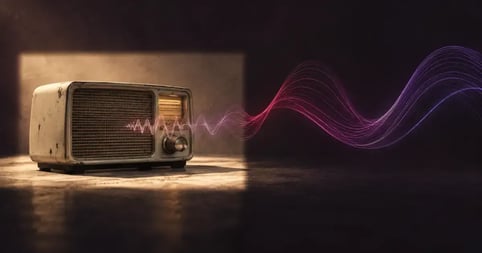
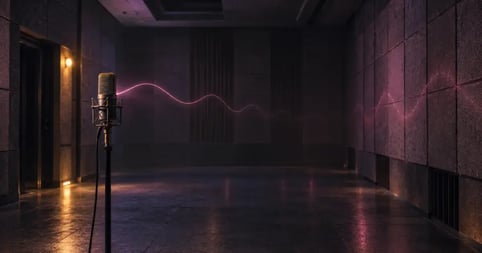
Diegetic sound comes from inside the story world, which means the characters can hear it: dialogue, footsteps, a song on a car radio. Non-diegetic sound is added for the audience only, and nobody on screen can hear it: the score, most voiceover, a sound effect dropped in for punch. That's the whole test, and it turns on where the sound is supposed to be coming from, not where it got recorded.
It sounds academic right up until you're in front of a timeline with a track you just licensed, wondering whether it belongs in the room with your subject or over the top of the scene. Same decisions that got F1 won the Academy Award for Best Sound, scaled down to this week's edit.
This guide covers the quick comparison, what diegetic sound is and where it shows up, what non-diegetic sound is and what it's for, the edge cases that trip people up (inner monologue, voiceover, sound bridges), what happens when a sound crosses the line, and how to pick between them.
The room cue and the score, same library.
116,000 tracks by real artists, so the bar band and the string swell come from one place.
Diegetic vs non-diegetic sound at a glance
| Diegetic sound | Non-diegetic sound | |
|---|---|---|
| Can the characters hear it? | Yes, whether the source is on screen or off. | No. It exists for the audience only. |
| When it gets added | On location, or rebuilt in post to sound like it was. | Built in post, after picture lock. |
| What it does for the story | Builds the world. Makes the place feel physically real. | Shapes how the audience feels about that world. |
| Typical sources | Dialogue, footsteps, traffic, a radio, rain on a roof. | The score, narration from outside the story, punched-in effects. |
Both layers land in the same mix, and building them is treated as different work. The Motion Picture Sound Editors hand out separate awards for dialogue and ADR, effects and Foley, and music editing, where Sinners took dialogue and ADR plus music editing at the 73rd Golden Reel Awards. All of it then gets judged in one category at the Oscars. Separate crafts, one soundtrack. For the wider view, start with sound design in film.
What is diegetic sound?
Diegetic sound is any sound with a source inside the film's world. The word comes from diegesis, which film studies borrowed from the Greek for narration and now uses to mean the story's own reality. The source doesn't have to be on screen. A siren three blocks away is diegetic even though you never see the ambulance, because it belongs to the world your characters are in.
Diegetic sound examples
- Dialogue between characters, on screen or off
- Footsteps, doors, dishes, a phone buzzing on a table
- Music from a radio, a record player, a busker, a band in the corner of the bar
- Weather and environment: rain, wind, traffic, a room full of people talking
Diegetic music, also called source music
Source music and diegetic music are the same thing. Two names, one idea: music the characters can hear. A jukebox in a diner, a car stereo, a wedding singer.
This is where the distinction starts costing you money. A source cue has to sound like it's coming out of whatever device is playing it, in whatever room the scene is in. Different brief entirely from picking a song for a montage, so it's worth knowing what a needle drop is in film first.
Diegetic sound effects and ambience
Most of what makes a scene feel real is diegetic effects work, built after the shoot. Foley artists perform footsteps, cloth, and prop handling in a studio against picture, because production audio rarely captures those cleanly enough.
Ambience is the quiet half of the same job. Every location has a sound floor, and losing it between cuts is a problem audiences feel without being able to name it. That's what room tone audio is for.
Diegetic sound is not always recorded on set
Here's the part that confuses people. Diegetic sound is diegetic because of where it sits in the story, not where the microphone was. Rebuilt in a booth six months later, it's still diegetic.
Sometimes it really is captured live, at scale. The F1 team recorded real cars on real tracks with onboard and external mics to get each manufacturer's engine and gear shifts. Other times a line gets replaced entirely in a studio, which is what ADR in film handles. Same category either way.
What is non-diegetic sound?
Non-diegetic sound originates outside the story world, which is why the characters never react to it. You'll also see it called commentary sound or nonliteral sound. It goes straight from filmmaker to audience.
The score and non-diegetic music
The score is the clearest case. Nobody in the scene hears the strings swelling, and if they did you'd have a very different film. It tells the audience how to feel without anyone in the story saying it. For the mechanics, we've written about how music affects mood and emotion.
Non-diegetic sound effects
Effects can be non-diegetic too, usually doing something stylistic. A whoosh on a transition. A record scratch for comic timing. Getting those to sit against the diegetic layer is a mix problem, which is where the difference between sound editing vs sound mixing starts to matter.
Voiceover and narration
Narration from a voice that doesn't exist inside the story is non-diegetic. The narrator is talking to you, not to anyone on screen. Real exceptions are covered further down.
The edge cases most guides get wrong
Three cases come up constantly, and film guides answer them in flat contradiction. Here's where we land.
Is inner monologue diegetic?
Yes. A character hearing their own thoughts is diegetic, because the source of that voice sits inside the story world even though nobody else in the scene can hear it. Diegetic doesn't mean audible to everyone, just present in the film's reality.
The line to watch runs between interior monologue and omniscient narration. If the voice knows things the character doesn't, or addresses the audience directly, it has stepped outside the story.
Is a voiceover ever diegetic?
Regularly. A character reading a letter aloud, a voicemail playing back, a radio host talking over a scene. All diegetic, because something in the story is producing that sound. The test isn't whether the speaker is on camera. It's whether anyone inside the film can hear them.
What about a sound bridge?
A sound bridge carries audio across a cut, and the honest answer is that it's diegetic on one side. The question is which. Audio from the next scene creeping in early is diegetic to the scene it belongs to, and doing non-diegetic work while it hangs over the previous shot. Filmmakers use that on purpose.
When a sound crosses the line: trans-diegetic sound
Trans-diegetic sound is a cue that starts on one side of the line and crosses. Score comes up over a montage, then a character shuts off the radio it was apparently playing from the whole time. It works because both layers are live in the same mix at once. Reviewers noted that about the Sinners release, with blues performances sitting alongside the score in an Atmos mix that keeps faint off-screen conversation audible under the dialogue.
How to decide which one your project needs
You'll almost always use both, so the real question is per cue. Four things to ask about any sound you're about to drop in: where is this coming from, could the person on screen hear it, what is it doing that the picture isn't, and should it sound like it belongs in that room or over the top of the scene.
That last one is the practical fork. Diegetic cues usually need to be period-correct and a little imperfect, because a pristine studio mix out of a 1950s kitchen radio reads as fake. Non-diegetic cues need headroom under dialogue and a shape that follows the edit. Two different searches. Our guide to using music in film and video projects takes it cue by cue.
Where to find music for both layers
You need range, because the two layers pull in opposite directions. Soundstripe has 116,000 tracks by real artists and roughly 100,000 sound effects, which covers the source cue that has to sound like a bar band and the score that sits under a monologue.
Describing what a cue has to do beats guessing at genre tags, which is the job Supe, Soundstripe's AI search assistant handles: tell it what the scene needs, then react.
Pick the side of the line. Then pick the track.
Start a free account and hear how a source cue sits differently from a score in the same scene.
Frequently asked questions
Diegetic means belonging to the story world. It comes from diegesis, the Greek word for narration, which film studies borrowed to describe everything inside a film's own reality.
Diegetic music also goes by source music, and diegetic sound more broadly gets called actual sound. Non-diegetic sound gets called commentary sound or nonliteral sound, and non-diegetic music is usually just the score. The terms are interchangeable, so use whichever one your collaborators already say.
Inner monologue is diegetic, because the character hears their own thoughts even though nobody else in the scene does. Voiceover splits: a narrator sitting outside the story is non-diegetic, but a character reading a letter aloud or a recording playing back is diegetic. Ask who inside the film can hear it.
Yes, and it is called trans-diegetic sound. A cue starts on one side of the line and crosses to the other: score fades up over a montage, then a character reaches over and turns off the radio it was apparently coming from. Sound bridges across a cut work the same way.
Because it changes what the track has to do. A diegetic cue needs to sound like it belongs in that room, which often means period-correct and deliberately imperfect. A non-diegetic cue needs to sit under dialogue without competing for attention. Same scene, two different searches.