


Music Rights for Podcasts: What You Actually Need to Clear
Music rights for podcasts break down into two separate copyrights you have to clear before you use…

A podcast episode does not come down. It sits in the feed being downloaded years after you recorded it, on every platform your RSS reaches, which is a long time for a music licence to have to hold. Every track here is licensed in your name at download, with the document in your account before anybody asks to see it.
A theme has about eight seconds to tell somebody what kind of show this is before they decide whether to stay. A bed has twenty minutes to sit underneath two people talking without ever pulling attention, which is a harder job and a different kind of track entirely. A stinger has to cut in, land, and get out of the way of the ad.
Pause
Yes, for anything you did not write yourself, and it matters more here than almost anywhere else because episodes do not expire. A video gets its traffic and moves on. An episode sits in the feed being downloaded three years later, so whatever you cleared it with has to still be true then.
The free libraries are real and a lot of good shows are built on them. Most attach conditions: credit the artist in the show notes, do not use it commercially, or terms the rights holder can revise later. Those are conditions, not suggestions, and a missing credit on episode nine is a problem you find at episode ninety.
The same handful of free catalogs get recommended in every roundup, so the theme you picked from one is the theme another show picked last month. For a format where the audience hears your opening bars every week, sounding like the show next to you in the app is a real cost.
Your RSS feed pushes the same audio to Apple, Spotify, YouTube and everywhere else at once, and none of those copies comes back down. A license in your name covers the episode wherever it lands and stays valid over the back catalog, so year one is still cleared in year four.
Licensing music for podcasts means getting written permission from whoever controls the recording and the composition. For a commercial release that is two separate negotiations, one with the label and one with the publisher, and podcast rights are frequently not something either will grant to an independent show at any price. It is the reason you do not hear chart music under an interview.
A subscription hands you the licence up front instead. Download a track and it is issued with the file, in your name, covering the episode, the back catalog, sponsored segments and the ads inserted into them. If a subscription is more than the show needs, a single-use license covers one track for one project, which is often the right shape for a theme you intend to keep for years.
Free account, full catalog, and the license terms before you commit to anything.
Rights, gear, and picking tracks that fit your show.
Music rights for podcasts break down into two separate copyrights you have to clear before you use…

You need four things to record a podcast that sounds good: a microphone, headphones, something to…
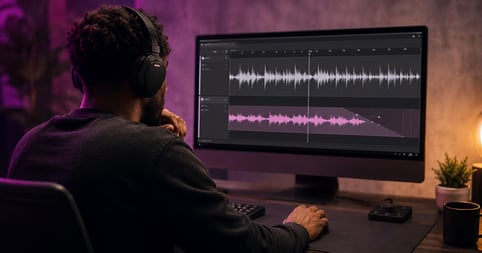
The right podcast music comes down to three decisions: what your show's personality actually is,…
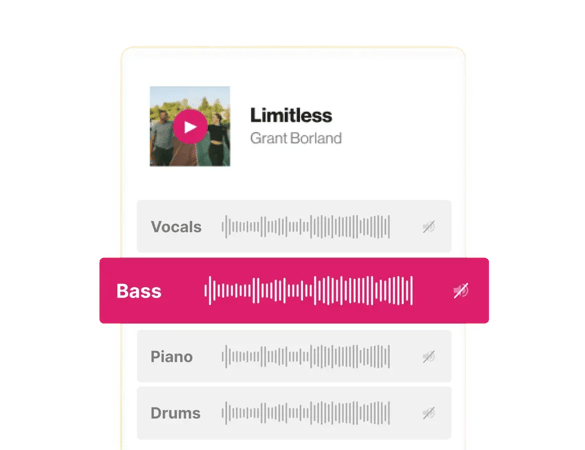
Yes. One download licenses the track as your theme across every episode and every platform your feed reaches. You do not re-license it per episode or pay again as the show grows. Most hosts choose a theme before episode one and keep it for the life of the show, so the choice is worth more time than the paperwork. If you want variations for a trailer or a bonus feed, stems and cut-downs come with the same track.
Yes. Soundstripe licences cover commercial use, and that includes ad reads, branded segments and fully sponsored episodes. There is no separate clearance to buy when a sponsor comes on board, and no need to swap the theme out for the sponsored run. This matters more than it sounds, because sponsorship is usually the first point at which a show's music arrangement gets looked at closely, sometimes by the sponsor's own legal team.
No. One licence covers every platform your RSS feed serves, plus the YouTube version of the same episode. Distribution platforms are not separate rights in this context, they are destinations for a file you have already cleared. It also means a show that starts on one host and moves to another does not need re-clearing partway through.
Most shows use three things: a theme for the open and close, a bed that sits under conversation without competing with it, and short stingers to mark segment changes. A fourth, an ad-read bed with no melody, becomes useful once you have sponsors. You do not need all four on day one, and plenty of shows launch with a theme and nothing else.
Not without permission from the rights holder. Podcasts do not have a blanket licence the way radio does, and the platforms distributing your show do not clear music on your behalf. Using a commercial release means negotiating directly with the label and the publisher, which is why most shows license production music instead. Fair use is decided case by case, usually after someone has already complained.
There is no safe duration. The idea that a few seconds is allowed is one of the more persistent myths in podcasting and it has no basis in copyright law. Length affects how likely you are to be noticed, not whether you are infringing. If the music is not cleared for the way you are using it, a shorter clip does not fix that.
No. Attribution is not required, unlike most free music libraries where crediting the artist is a condition of use and forgetting it puts you outside the licence. You are welcome to credit them and many hosts do, because it is a decent thing to do for a working musician. But your licence does not depend on it and nothing breaks if a week goes by without it.