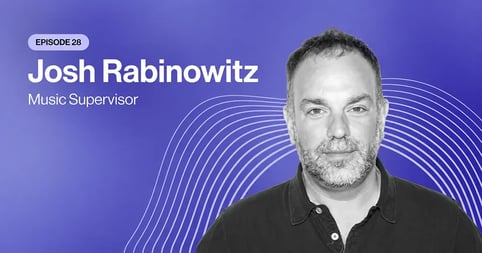
Rebecca Rechtszaid took 13 years of vocal lessons, played in South Florida garage bands, and briefly planned on being a rock star. Then she went to Harvard Law instead, ran the student clinic that gives free contract review to musicians who can't afford lawyers, spent five years inside one of the four American performing rights organizations, led legal for creator programs at Meta, and left to open her own firm. Her first clients, before law school and before she was licensed to do any of it, were her younger sister's brand deals.
She is the first attorney to come on Soundstripe Sessions, which is overdue, because the gap between what creators are being asked to sign and what they understand about it has never been wider.
Jeff Perkins talks to Rebecca about why music licensing is genuinely complicated and where it's complicated on purpose, why platforms have no incentive to stop you using a song you don't have rights to, the two clauses she wants every creator to look at in a brand deal, and whether you can copyright a vibe.
This conversation is general information about how the industry works. It is not legal advice, and it doesn't create an attorney-client relationship with anyone.
Key takeaways
- A song is at least two things: the composition and the master recording. They're owned separately, often by several people each, and every one of them can say no.
- Some of the complexity in music contracts is real. Some of it exists so the other side won't read it. She has seen a 200-page record deal.
- Platforms are not going to stop you from using popular music in a brand deal. Their incentives point the other way, and the liability lands on the creator and the brand.
- A mechanical license does not cover sync, and neither one covers public performance. Three different rights, three different sources.
- In a brand deal, the two clauses she watches hardest are exclusivity and perpetual usage.
- Copyright protects expression, not concepts. Two people can both love beige.
- If you can't afford a lawyer, volunteer arts lawyer organizations exist in almost every state and law students are genuinely excited to read your contract.
Listen to the episode
Queen at Wembley, and a bout of pneumonia
Jeff: Take us back. Where'd you grow up?
Rebecca: I grew up in South Florida. I'm the child of two immigrants. They moved here from Bolivia in their teens and late 20s. We grew up in a neighborhood of people who were really musically inclined and theater inclined, and I have loved music since I was a little kid. One of my first memories is seeing Freddie Mercury playing at Wembley Stadium, and I've been obsessed with Queen ever since. I took 13 years of vocal lessons. Tried and failed to play piano. I'm not coordinated enough, unfortunately, and that extends into sports.
Rebecca: I got into audio engineering and started playing in garage bands locally and really loved it. I thought for a hot minute I was going to be a rock star. My parents very swiftly were like, I think you need to go to college. So I did, and I pursued a practical degree in economics, and I was under the impression I might actually go do music after.
Rebecca: While I was in college I got really sick. I got a bout of pneumonia that I'd worked myself into the ground from. So any dreams of being able to sing professionally were gone. My stamina is just not there anymore.
The sister who became her first client
Rebecca: Around that time my younger sister started making content and singing online. She was one of the first verified creators on Musical.ly, before it was TikTok, and did a lot of live streaming on YouNow. She became one of their partnered influencers, and she had a ton of followers on Instagram and was making money doing it. She was in high school making money doing it.
Rebecca: So I'm managing her, I'm helping her do all the business, I was doing her contracts for her, negotiating against these platforms as a 1L or in some instances even before law school. And I realized that this was what I wanted to do. I pursued the path so aggressively from day one of law school to become an entertainment lawyer. I'm probably one of two people in my entire graduating class who really, really wanted to do entertainment and made it happen.
Jeff: Did you work before law school?
Rebecca: Two years in the financial sector. I have an economics degree, so what do you do, you go into consulting. I spent two years in New York City as a financial risk and compliance consultant while studying for the LSAT. I was working 70 hours a week, flying out twice a week, and studying for the LSAT all at the same time. I don't think I slept more than two hours a night for an entire year when I was 21. The plan was, make money, save for law school, and get some work experience first so I could translate that to client services once I'm actually a lawyer.
The campus tour her dad made her take
Jeff: And you got into a pretty good law school.
Rebecca: I had an okay GPA in college. I got really sick, so my grades took a hit that semester, but my LSAT was really good. I thought I could reach for NYU. My parents forced me to apply to Harvard. My parents forced me to apply to Stanford. I didn't want to apply to either of them. I thought it was a waste of money and time.
Rebecca: And when I got in, I still kept saying, well, but I have a scholarship to NYU, why would I ever pay full price to go to Harvard? That's insane. I hate Boston. I don't want to do it. And my dad, who works seven days a week because he's the sole breadwinner of my family, was like, I'm going to take a week off work, I'm going to close down, I'm going to fly to Boston with you, and I'm going to make you tour this campus, because you are going here, I don't care.
Rebecca: So I went, and I saw how excited he was, and I was like, I guess you're right. And I fell in love with the campus. I talked to a bunch of people about what to do when it snows, because I'm a Florida girl and that was why I didn't want to go. There are tunnels under the law school, which was very helpful. It made me feel better about being there. I insisted on living across the street so I wouldn't have to deal with snow.
Rebecca: I've told my dad so many times how grateful I am that he pushed me. People think of Harvard as this really competitive, cutthroat, Legally Blonde kind of environment, but I made some of my closest friends there. Everybody was so helpful. We were very much a rising tide lifts all boats kind of crowd. There's no real ranking system there, which encourages that. And it's not because of the name alone. It's because of the quality of the people I met.
Jeff: You didn't go the traditional path though. People who go to Harvard are thinking, I want a Supreme Court clerkship, or I'm going to the white shoe firms in New York. Did they have a good curriculum around entertainment, or did you have to figure it out yourself?
Rebecca: Harvard has a student-run pro bono legal clinic for musicians who can't afford lawyers, and I became the president of it. I was very deeply involved. They have a lot of programs, though I think they could stand to have a few more, and I've been in chats with folks who work there about how to introduce more transactional entertainment into the curriculum.
Rebecca: But coming out of there I was completely prepared for taking on very meaty intellectual property issues. So much of law school is not about knowing the individual law and knowing how to do the thing when you get out. It's much more about knowing how to think like a lawyer, knowing what to look for, and processes. I went into a white shoe firm, but in LA, in their entertainment practice. I was there about a year before I got scooped and put into my in-house role at GMR, where I stayed for five years.
Inside a performing rights organization
Jeff: Tell us about Global Music Rights. What did you learn there about the crazy world of music licensing?
Rebecca: For those who don't know, Global Music Rights is one of the four main PROs in the United States. It's ASCAP, BMI, SESAC and then GMR. There are a couple of new entrants to the space, but those are the four big ones. GMR is the only one that's invitation only. ASCAP and BMI have to take anybody who wants to be part of them. SESAC is by application. With GMR, they have to find you, and they primarily only service the most premier artists and composers for TV and film.
Rebecca: So I was involved in signing people like Lorde and Maggie Rogers to our roster. And then I also turned around and was involved in licensing out, because it's a small legal team, small but mighty, that handles all affairs for GMR. I was licensing our catalog to people like Fox and Facebook when it was Facebook, and TikTok and Tidal and Spotify. It was all hands on deck.
Rebecca: I started in 2020 and left in 2025, which was a very weird time. AI had just started to come on the scene. There were conversations about how do we expand into different areas, who have we not licensed yet.
Rebecca: And when you're a rights holder, theoretically those who are using your music need to come to you to get a license. But the reality is you're the one going to other people and saying, hey, I see that you used our music, would you like to do that legally, or would you like us to do something about it? So a lot of my job was supporting our business development team on inbound requests, and doing a lot of research and outbound outreach to people using our music without authorization.
Why music licensing is so complicated
Jeff: I came into Soundstripe two years ago. I didn't come from the music industry, and the first thing I was shocked by was how complicated music licensing is. Break it down. Why is it so complicated?
Rebecca: It's complicated in part because the technological advances of the music industry over time have made it so. Copyright's in the Constitution. It's been around for hundreds of years. When it was first conceived of in the United States, you had visual works, and you had people playing music and having sheet music. There was no such thing as a recording.
Rebecca: So as those things get layered on, we start dealing with all the different layers of who contributed and what other things somebody could use but separate out and use differently. Think about a song that has a composition, which is the sheet music and the actual bones of the song, and then the recording, the master recording. We think of that as one thing now, but it isn't really one thing. The master is a newer thing that we also have to deal with separately, because anybody can make a different master of the same underlying composition.
Rebecca: And there are different contributors. There's a songwriter, and they may not be the same person as the recording artist. There might be several producers. There might be several recording artists who do their own version. It's really complicated because in practice it is complicated.
Rebecca: And then there's the added layer of people making music licensing complicated because it keeps the artist from being able to advocate for themselves properly. And that's not okay. I'm not happy about that. So it's been my mission to make it as plain English, as simple, and as clear as possible to the musicians and content creators I work with, so they understand what's going on and they're not getting thrown all kinds of legalese.
Rebecca: Some of the record labels I've worked with have been doing a lot better about this, and their deals are 15 or 16 pages. But I've seen a 200-page record deal before, and that's crazy. That's not necessary. It's done because nobody's going to read that. There's some necessary complexity, and then there's also completely unnecessary complexity done to confuse people.
The guy in Long Island who owned 25 percent
Jeff: I worked in advertising in New York years ago. The creative director was hellbent on getting this one older Motown song, and I was the account guy, so I had to go track down how to get it. And it's not just that different people own the publishing and the recording. Multiple people own it, and multiple people have to say yes for any specific project. I wanted to use it in an ad for a kid's fruit snack, and everyone had said yes except this one guy who owned 25 percent of the song out in Long Island. He was holding out. So I had to go visit his house and beg him.
Rebecca: Making sure people really understand what they actually need to do to get a song cleared is really important. The performance part is a lot of the time the most complicated, because of the way the different performing rights organizations in the US have decided to operate together. Clearing a song for sync is honestly one of the most difficult and headache-inducing things I see people deal with today.
What to do when you can't afford a lawyer
Jeff: What's your guidance for artists on negotiation and contracting? Most musicians are not lawyers, and the young ones may not have the resources to hire one. You're handed a 200-page contract. Where do you start?
Rebecca: The first thing, and this is the most basic thing, is actually read the whole thing. A lot of it's going to make sense if you read it. Not all of it, but a lot of it. If you sit with it and really focus, you can parse through what it means and what they're asking of you.
Rebecca: And then you ask a ton of questions. Put it to the other side if you absolutely need to. They can't provide you with legal advice and they're going to give you a skewed answer, but at least if you're asking, okay, what does two plus one mean? If someone sends you a term sheet and you're brand new and have no idea, you can ask. They'll tell you it's two committed albums and then an option. You don't need a lawyer to tell you that. There's also Google, which is really helpful. And there are a lot of people like me who are committed to education, putting out content every day to help people gain a leg up when they're so far behind.
Rebecca: Some of it is just the unfortunate reality of power imbalance in all of these industries, and it's horrible, and it ends up letting people lose tons of money and lose lots of opportunities. But that's the hard truth of the matter.
Rebecca: I've sent a lot of people to volunteer lawyer organizations that are pro bono. Harvard's Recording Artists Project, where the law students would be so excited to go through a huge recording agreement and help you. They would die for that. Me eight years ago would have been like, oh my god, give it to me right now, you don't have to pay me, I just need to read this thing.
Rebecca: There's California Lawyers for the Arts for people here. There's Volunteer Lawyers for the Arts in Nashville and in New York. Almost every state has one. A lot of them are big law lawyers who are really sophisticated and know what they're doing. They just really want to get in touch with the art side that they've had to abandon in order to do the M&A deals that pay them tons of money. This is a way they can give back and do something they find interesting. If you really can't afford a lawyer, that's one way to go.
Inside Meta
Jeff: You go from GMR to Meta, working in the creator world again. What drove that?
Rebecca: I'd been doing that since before I ever went into the music industry. I've been working with my sister forever. My sister was already at Meta when the opportunity came up, and she sent it to me and said, I think this would be perfect for you, I'm worried you're pigeonholing yourself in music a little bit too much.
Rebecca: I loved my job at GMR. Everyone there is amazing. I'm still very close with everybody I worked with, and I cried on my last day. But the reality was it's a small company and I was going to hit a wall in my career, and I knew that. Being able to see the inside of these big platforms was something on my checklist of things I needed to learn before I went out on my own, and I hadn't done it yet.
Jeff: What was taking up your time there?
Rebecca: A lot of brand deals where Meta is the brand. Hundreds of creators in a single push, and I'm doing the forms for every tier and every different kind of creator. A lot of intellectual property thought had to go into it, and it's cross-jurisdictional. I'm doing creator deals with people in India and in Brazil, and having to learn all the local laws for creators in each of those places was terrifying to someone who has no footing and can't speak the language. Thankfully Meta has lawyers in each of those places, so I was able to call them. I had to keep some weird hours because of time zones, and I'd get on the phone and say, I need you to explain to me how this works in your country, because I'm scared I'm going to put something in here wrong and it's not going to be enforceable.
Rebecca: And a lot of inbound content licensing, because that's what Meta does. It's a content platform. They've either got to license content in by directly paying a creator, or license it in via their terms of service from users, and then put it out to other users. So I was dealing with how our terms of service come into play, what we need to think about with FTC guidelines when we're employing creators to do something for us, and what we need to think about for our music licenses with the rights holders. Which was very interesting for me, having been on the other side. I was like, I know what this deal looks like from over there. I wrote that deal.
Why platforms won't stop you
Jeff: All the social platforms have popular music on them, and I think that's a win-win. The artist gets exposure on a massive platform and the consumer gets to use popular music in their content. But then creators build a following, and brands come in and say, I want that creator to do a video for me. And the creator just does their normal video and pulls a popular song into it on behalf of that brand.
Jeff: That's a terms of service violation. It's commercial purpose, it's basically advertising, and the brand has not paid for the rights. But there's no technical restriction. You can put that song in and you're probably okay until you get caught, or until you get a huge lawsuit because you used 150 songs over the last year and nobody gave you guard rails. Why aren't there more restrictions?
Rebecca: From the platform's point of view, you should know what you're getting into as a brand or a creator, and they very clearly put that in their terms of service. This is every platform, by the way. This is TikTok, this is YouTube, this is literally anything you're posting on. They're going to say, I didn't know, I had nothing to do with this.
Rebecca: And they're incentivized not to moderate, to put all the onus on the brand, on the creator, on the user, by the way our legal structure is set up. There's the DMCA, where if they start really moderating for copyright infringement, they become much more liable than if they weren't. So a lot of these platforms are going to be agnostic, because they don't want to get involved and they don't want to be a party to an infringement lawsuit. As much as that doesn't help the end user, they're worried about their own legal liability and exposure.
Rebecca: Where it becomes a problem is when people at Meta who may not know this, like the marketing team, start asking about it and wanting to do it. Thankfully they generally run it by legal. I would always catch it before it would happen. I'd hear about a marketing campaign and they'd say, oh yeah, we're just going to use this song, and I'd be like, what, and shut it down. Then we'd go clear it directly with our rights holder partner, or we wouldn't use that music and we'd use something that was more of a production music situation, or there wouldn't be music at all.
Rebecca: We made a big manual for our teams saying, please read this before you post anything, here are the things you need to think about, here's what you don't put in there. So internally that's something they're very careful about. Sometimes there's someone new who doesn't know and everyone has to jump on them. But as a third party, it's not their responsibility to police you and stop you as a user.
Influencer marketing is advertising
Jeff: The change in marketing over the last couple of years has led to a wild west environment. When I worked in advertising, we would buy ads on big networks, and you would never even consider putting music in an ad unless you had the full rights. Legal teams were involved at the agency and on the client side. Everything was under a microscope, including whether we had rights to the stock photos or video. It was really buttoned up and you had all the documentation.
Jeff: And now you have influencer marketing, and the sentiment is, we want to let the influencer be the influencer. The mindset wasn't that you're actually doing an ad, which is what you're doing. They have an audience just like NBC has an audience. You're paying that influencer to reach their audience with your brand message, just like you would on a television network.
Jeff: We have a customer, a big cosmetics company, and they work with influencers all over the world doing makeup tutorials. One thing they make those influencers do is upload a Soundstripe song to any video across any platform. They cannot use platform music, because the company just doesn't want the risk.
Rebecca: A hundred percent. Influencers and content creators are the next generation of media companies. It's no different. It just was a lot smaller and more segmented at the beginning, and people didn't really know what to do with it, because it feels like someone's in their house. So it feels like a user, but they're not a consumer end user in the way we really think about it. They're a media company that happens to be a person. Think of Mr Beast. He's a person, but he's a media company. This is the future of entertainment in so many ways.
Creators who become CEOs overnight
Jeff: We met at VidCon, where I was running a round table on music licensing and then you came in and clearly knew everything about music licensing, and I was like, oh man, this is intimidating, I think she knows more than me and I'm leading this table.
Jeff: The thing that stuck out to me this year at VidCon was the professionalization of the creator world. So many sessions were about how to be your own CEO, accounting for creators, and there were so many investors there to talk to creators about their business. How do you help creators think about the professional side, when a lot of them got into this because they're creative people with fun ideas?
Rebecca: Most of these people are kind of dragged kicking and screaming into the notion that they are the CEO. It's a hard conversation to say the least. I understand not wanting to do it, because if you're a creative person all you want to do is make the creative thing. You don't want to think about accounting. You don't want to think about having agreements with people. It feels like you're slowing things down and being a stickler.
Rebecca: The music industry has always been like this, and now the content creator industry is like this. We're friends, trust me, it's fine, we'll just handshake it. Which is great, until it falls apart. Or until you have an investor come in and start doing due diligence and they realize you have no agreements and you don't own anything on your channel. Maybe you didn't clear your licenses for music, or for a clip of some audiovisual work in your content. You don't own your trademark. You don't own anything. Then it's not okay anymore.
Rebecca: And a lot of the time people decide only then that they need a lawyer, or a fractional COO or CFO. A lot of the time that's a little late, and you start running into problems where you have collaborators who don't want to say that you own everything and now want to be co-owners, because they see the cash cow.
Rebecca: I hate giving people scary stories, but I do that a lot now, earlier on, with people I see have potential and who don't want to go down the path of IP agreements, or don't want it written down who owns what and who has the right to exploit it, or don't want to think about what music they can and cannot use until they get hit with a cease and desist or they get demonetized or their account gets deleted off YouTube because they did it too many times.
Rebecca: If you're a content creator, you're delving into a very legally intense area of business. It's important to at least have an understanding that you're doing that, and then take care of yourself from the beginning. It's a lot easier to prevent than to clean it up later. So my refrain is, get your LLC or your corporation together, get your trademark, make sure you have agreements with everybody whose content or face you're using. That's just the basics.
Two clauses to watch in a brand deal
Jeff: Talk about the contract traps creators need to look out for. One of your videos was about brands dictating what other categories you can do deals in.
Rebecca: Exclusivity is a huge one. I've been on the brand side where the marketing person puts it in there and doesn't realize how broad it is, but then later they're conveniently going to read it to be whatever works better for the brand. If the brand wants to prevent you from working with some gummy vitamin brand, they're going to do that if they have the right to, even if it's not what they initially intended.
Rebecca: So for exclusivity, what I always say is try to narrow it as much as you can. If you're promoting a product, keep it to that product. Don't let them say any competitor of the brand. Think about Unilever or P&G. If it's any competitor, that's pretty much every vertical there ever has been or will be in consumer products. That doesn't really make sense.
Rebecca: And then usage. A lot of brands want perpetual usage of the content you're giving them. There's value in perpetual usage, but sometimes you don't want to be associated with someone for 20 years or longer. I had a creator come to me recently and it was perpetual usage for like $200. This is someone with a decent following, but they cared about it, it was a nonprofit, they wanted to help. And I was like, that's great, but what if they invest in some kind of research you don't like in 10 years and they're still using your face to say I think this nonprofit's great, and you can't stop them because you granted them that right? That would be pretty bad, don't you think? And they were like, oh my god, I never thought they could do that.
Rebecca: You should limit the right. If they want to continue to use it, you could renew it for free if you want. If it's truly a nonprofit you really believe in, you can tell them, every year you have to come to me and I'll opt back in. That would be fine. But otherwise they should really be paying for the continued usage of your face.
How creators should handle music
Jeff: What do you advise creators to do about music? The platforms all have commercial music, so if you're doing a brand deal you can grab something from YouTube. But those songs may not be available forever, and a commercial song from YouTube covers YouTube, not TikTok.
Rebecca: If you can get the rights directly, that helps a ton. As long as you're sure whoever's granting you those rights has a license with the individual platforms you're going on. Asking for that in the reps and warranties of the agreement is really helpful. Or at least having what's called pass-through rights if you're doing a direct license.
Rebecca: So let's say somebody comes to you and licenses a song. Either they'd want you to have individual deals for performance rights with YouTube, with TikTok, with Meta and all the other platforms, or they'd want you to give them the right to perform it themselves on their own website and also to pass it through to any platform they're using that video on. That kind of thing usually covers you pretty well.
Rebecca: The performance thing is tough too, because people don't think about it. When you get a mechanical license from someone like Harry Fox for a popular song, that doesn't cover every use you're going to have. It doesn't cover the sync, which is playing the song along with audiovisual. You usually have to get that directly from the label and the publisher, or whoever owns it. In Soundstripe's case it's just you guys. I know you own all of your catalog. And then you also have to go get the performance right. Not you as the person making the content, but the last person in the chain, the one performing it out to the public.
Rebecca: People don't realize that a Harry Fox mechanical license doesn't cover that. So if YouTube doesn't have the license with whoever controls the right to perform that song publicly, whether that's ASCAP, BMI, SESAC, GMR, or someone who does it themselves and doesn't belong to any of those organizations, they could just get it taken down and then put a copyright strike on you. That's not fun or good for anybody, the brand, yourself, the rights holder or the platform.
Rebecca: It's a lot easier to know that you're either getting something through the platform that you know is okay, or going to the rights holder directly and vetting that they have all the relationships they need, or that you have a pass-through right.
Jeff: Because we own everything in the catalog, if you have a subscription or you buy the song, you have the rights to use it in the channels you buy it for. We also do covers from time to time, and we can't put those in the catalog, because we don't have the rights. We put them on Spotify. And then someone might want to use one in a television show, which has happened, so we do a sync deal for those. But we can't put them in the catalog for everybody to use. Some people say, I saw this great cover you did on Spotify, can I use that? And it's no, because we don't have the rights to give you the rights. That's why most of the time we don't do covers. We just have original music in the catalog.
Can you copyright a vibe?
Jeff: One of the best practices going around now is, find a category that's popular where there isn't a ton of content, and be another creator in that category. And in one of your recent posts you were talking about a case where an interior designer had a certain aesthetic and another creator came in and copied it, and there was a huge federal lawsuit. How does that even work?
Rebecca: That particular case was interesting because it was copying a vibe. And generally speaking, copyright law doesn't really cover things like a vibe. It's not meant to cover a concept. It's not meant to cover an idea. It's an individualized, original, independently created expression that's fixed in a medium. So having two people who really love beige is very hard to square with copyright law.
Rebecca: If the posts are the same, then fine. But if they're not the same, and it's just that we both really love beige and it looks very different and we express it in different ways but both of our Instagram grids are just very beige, that's not copyright theft. It might be trademark or trade dress, if it's properly looked at that way. That case ended up settling out of court, so we'll never know what happened. It's a confidential settlement. But it's a little overreaching to say a vibe is something you can box other people out of. I understand being offended and upset, because people don't like copycats. But it's just, do it better.
Rebecca: I've also seen a lot of people take someone's Instagram post and copy the exact same thing, the exact same text, the exact same format. That's a lot closer to copyright infringement, because you're using exactly the expression they used.
Rebecca: It's hard to square that on social media with the trends that happen, though. Dances are copyrightable. A lot of people have copyrights to things like that, but they choose not to enforce them, because it's better for them not to. They're like, great, I love that everyone's using this, it's bringing more traffic back to me. It becomes a business decision rather than a legal one. Then there are the memes, where you're using the exact same photo but nobody's really enforcing. There was the Success Kid meme, and there was a political use of it, and they actually sued that one person, because they didn't want him to be able to use it, but they weren't enforcing against anybody else because they didn't care.
Rebecca: And in copyright, you don't have to enforce your copyright in order to continue to use it. For trademark, you do.
Why she's a metalhead
Jeff: What's your favorite metal band?
Rebecca: Old Avenged Sevenfold. And I love death metal. I grew up in it, actually. My dad's a huge metalhead, so I've been going to shows forever. I've seen Korn probably 15 times. I've seen System of a Down. They're interesting because they use more Middle Eastern scales in their music.
Rebecca: Metal is really interesting because everybody in the scene has to be at the absolute top of their game on whatever their instrument is, because it's so complex and so difficult. The vocalists who scream, I know a lot of people hate that, but it's so hard. As someone who's done extensive vocal training, I can't scream. No matter how many times I've tried, I can't do it. But these people are out there doing it, and then they come back and speak with a perfect voice. They don't mess up their vocal cords, because they know how to do it in such a beautiful way.
Rebecca: The drummers are incredible, some of the best drummers you'll ever see. And the guitar players. If you've ever seen a DragonForce show, they play in a time signature I don't even know how they do. It's unreal. And then you meet them off stage and they're the nicest people you've ever met in your life.
Advice for her younger self
Jeff: What's one piece of advice or wisdom you'd give your younger self?
Rebecca: That all of the networking I did young, and being nice to everybody, and making sure I'm not a jerk of a lawyer, which a lot of people tend to think they need to be, is going to be the thing that serves me best in my career.
Rebecca: I have stayed close with so many people over the years by being persistent but kind. Some of the people who've sent me the most clients, who've advocated for me throughout my career, are people who were across the table from me on deals and just knew I was good at what I did, but that I was kind and fair and wasn't going to try to bury them for the sake of it. We just cared about the outcome.
Rebecca: A lot of lawyers, especially young lawyers, don't understand they need to keep that in mind. They're very focused on, I have to be right on every point, and even if it doesn't matter ultimately, I'm going to bury the other side. I've never lost sight of the fact that the other side's a person, someone who's going to work with me and against me on several things throughout my career.
Rebecca: So when I have a client who needs to work with somebody, and I know the head of A&R at the record label, or the brand marketing person, or the general counsel at this company, I can call that person up and say, look, this is our end goal, this is what we want, how do we make that happen, just be straight with me. And they'll actually do that, instead of trying to get more out of me, because they know I'm going to try to make it the best possible marriage between my client and them so everyone's happy in the long run.
Frequently asked questions
Who is Rebecca Rechtszaid?
Rebecca Rechtszaid is an entertainment and music attorney and the founder of Rechtszaid Law, P.C., a Los Angeles firm handling contracts, licensing and intellectual property for creators, brands and media businesses. She was previously senior director of business and legal affairs at Global Music Rights and led legal for creator programs at Meta. She is a Harvard Law School graduate, where she served as president of the Recording Artists Project.
Why is music licensing so complicated?
Because a song is legally more than one thing. There is the composition, meaning the underlying song itself, and the master recording, and anybody can make a different master of the same composition. Each side can have multiple owners, including songwriters, recording artists and producers, and each of them may need to approve a given use. Rebecca Rechtszaid adds that some of the complexity is genuine and some of it is manufactured, because contracts that nobody will read make it harder for artists to advocate for themselves.
What are the four main performing rights organizations in the US?
ASCAP, BMI, SESAC and GMR, with a few newer entrants to the space. ASCAP and BMI accept any songwriter who applies. SESAC is by application. GMR is invitation only and focuses on premier artists and composers.
Does a mechanical license cover using a song in a video?
No. A mechanical license covers reproduction. Using a song alongside picture requires a separate sync license, usually from the label and the publisher or whoever controls the rights. Public performance is a third right again, controlled by a performing rights organization or by the rights holder directly. Missing the performance piece is how creators end up with takedowns and copyright strikes.
Can I use popular platform music in a sponsored post?
Generally no. Music libraries offered inside social platforms are licensed for personal, non-commercial use, and a paid brand deal is commercial. The platform will not usually stop you at upload, because platforms are structured to place that responsibility on the creator and the brand, so the liability sits with you rather than with them.
What should creators look for in a brand deal contract?
Rebecca Rechtszaid singles out two clauses. Exclusivity, which should be narrowed to the specific product rather than any competitor of the brand, since a broad clause at a large consumer goods company can lock a creator out of most of their category. And usage rights, since a perpetual grant means the brand can keep using a creator's face indefinitely, regardless of what the brand does later.
Can you copyright an aesthetic or a vibe?
Generally not. Copyright protects original expression fixed in a medium, not concepts, ideas or general aesthetics. Copying someone's exact post, text and format is much closer to infringement than sharing a similar visual style. A similar look might be arguable under trademark or trade dress in some cases, but not copyright.
Where can musicians get free legal help?
Volunteer arts lawyer organizations exist in almost every state, including California Lawyers for the Arts and Volunteer Lawyers for the Arts chapters in New York and Nashville. Some law schools also run pro bono clinics for musicians, such as Harvard's Recording Artists Project. Many of the volunteers are experienced commercial lawyers who want to work on creative matters.